

Pulp, Paper Mills & Drying Cylinder Bearings
Built for steam-heated drying cylinders, suction press rolls, calender stacks, and pulp refiners where high journal temperatures, long-span roll deflection, axial thermal growth, and moisture exposure demand controlled C3/C4 clearance and reliable W33 circulating lubrication.
Paper Machine Wet-End, Press & Dryer Bearing Solutions
Match each paper mill roll position to catalog-verified ZQM spherical and cylindrical roller bearings.
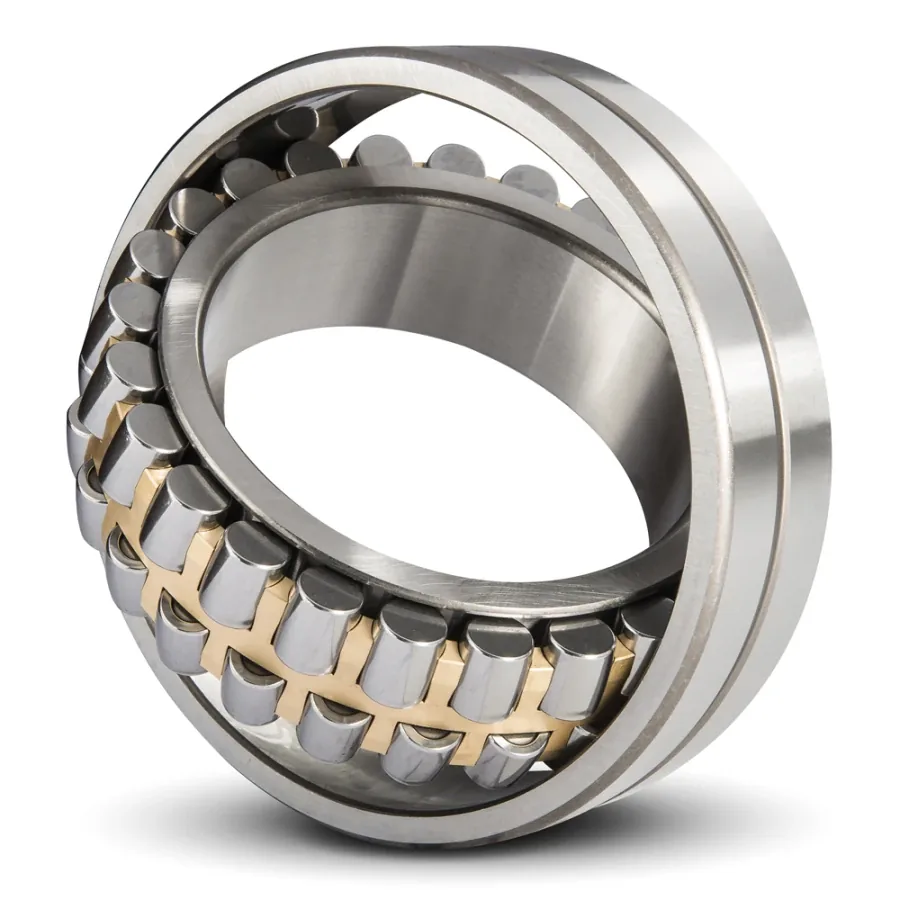
Live steam passing through hollow dryer journals creates sustained inner-ring heating and millimeter-scale axial shaft expansion. Large-bore 230 CA/W33 spherical units (straight or 1:12 K) paired with C3/C4 clearance and W33 oil circulation maintain stable film thickness.
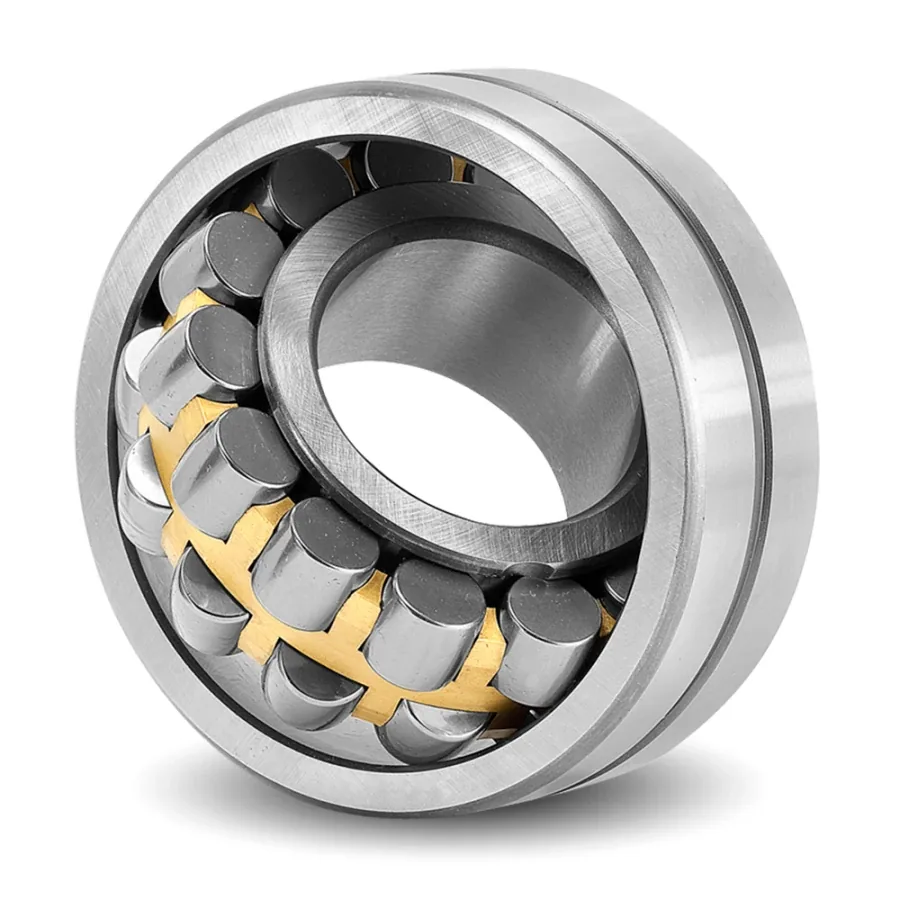
High linear nip pressure in press and calender sections demands compact outer diameter with high radial capacity. Wide-section 240 series spherical units (cylindrical or strictly 1:30 K30 tapered bore) resist heavy continuous radial loading.
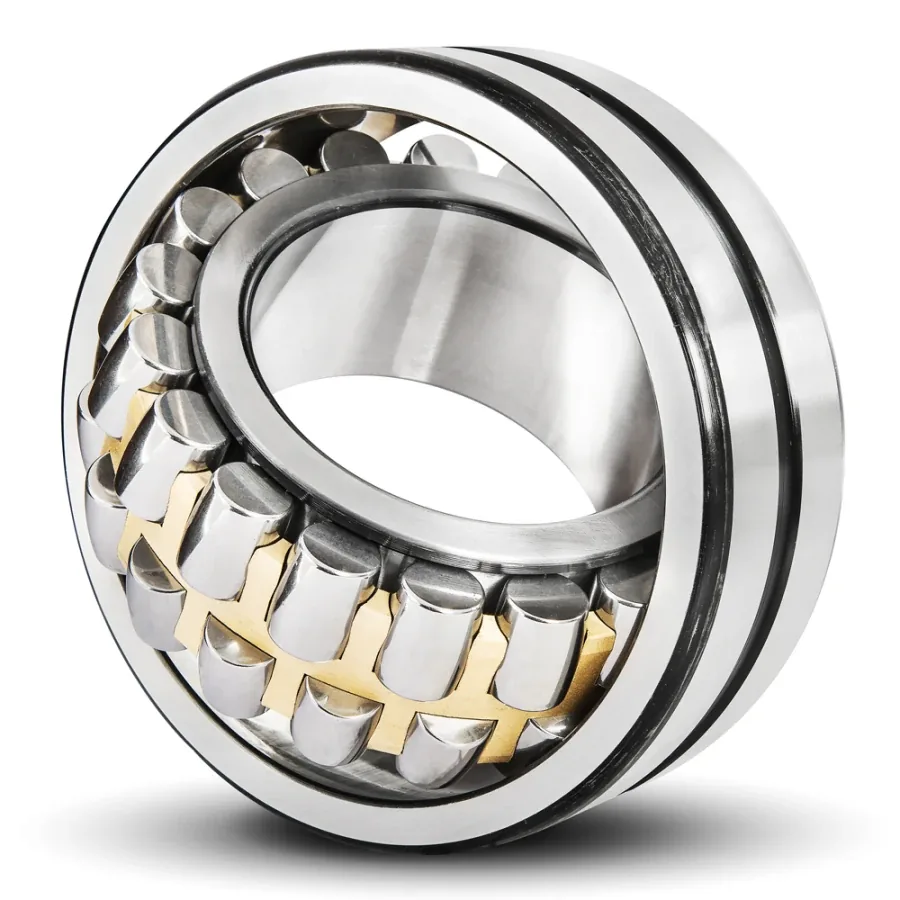
Conical and disc pulp refiners plus heavy couch rolls endure severe radial load, shock surges, and humid washdowns. Extra-wide 232 CA/W33 spherical roller bearings provide robust machined cage stability and self-alignment.
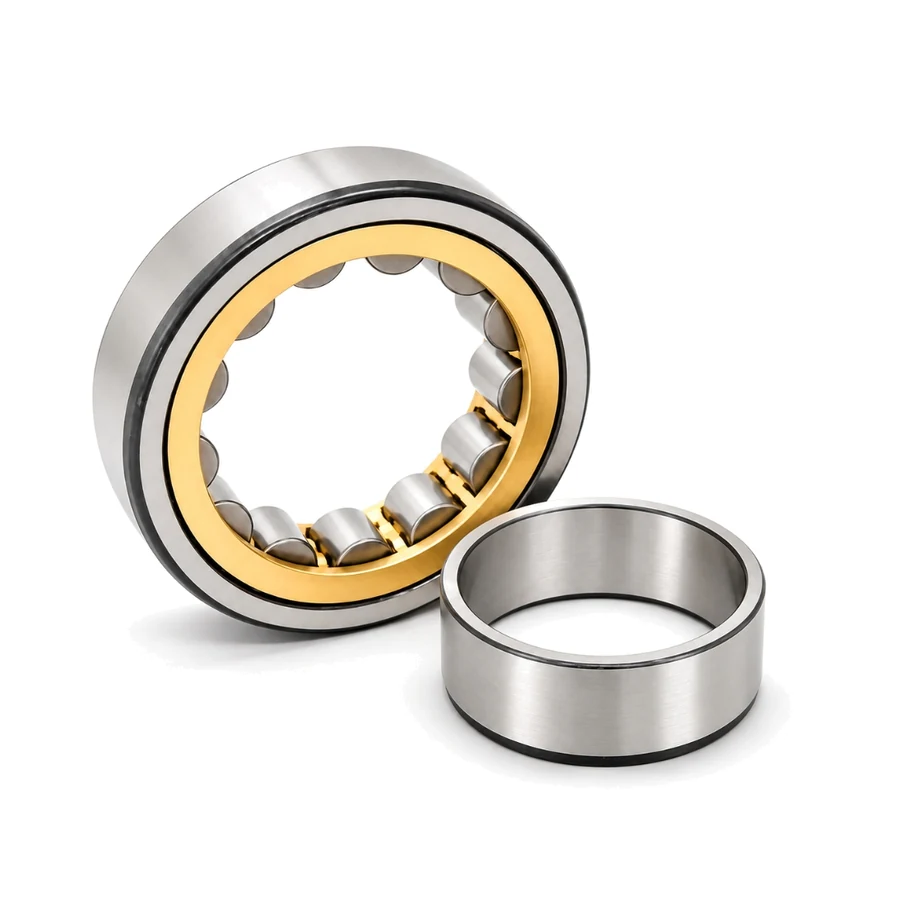
Long steam-heated rolls and sectional drive gearboxes expand axially during warm-up. Straight-bore NU cylindrical roller bearings permit smooth internal axial displacement without binding housing bores or generating parasitic thrust.
| Designation | Typical Equipment Position | d × D × B/H (mm) | Cr/Ca · C0r/C0a (kN) | Mass (kg) | Details |
|---|---|---|---|---|---|
| 23080 CA/W33 | Drying cylinder / suction roll (straight; opt. 1:12 K) | 400 × 600 × 148 (B) | 2,970 / 5,900 | Per catalog | Specs |
| 23096 CAF3/W33 | Wide paper machine dryer / press journal | 480 × 700 × 165 (B) | 3,800 / 7,950 | Per catalog | Specs |
| 24060 CA/W33 | Press & calender roll (straight; opt. 1:30 K30) | 300 × 460 × 160 (B) | 2,310 / 4,600 | Per catalog | Specs |
| 23240 CA/W33 | Pulp refiner / wet-end couch roll | 200 × 360 × 128 (B) | 1,660 / 2,750 | 57.1 | Specs |
| 23244 CA/W33 | Heavy press roll / paper machine main drive | 220 × 400 × 144 (B) | 2,020 / 3,400 | 80.4 | Specs |
| NU228EM | Sectional drive / floating thermal-expansion end | 140 × 250 × 42 (B) | 395 / 515 | 9.36 | Specs |
All dimensions and catalog ratings above are verified against ZQM Factory PDF Catalogue DB (v1). Verify required radial clearance (C3/C4), heat stabilization requirements (e.g., S0/S1 per drawing), and bore taper (1:12 K vs 1:30 K30) prior to ordering.
Engineering Guidelines for Paper Machine Reliability
Essential thermal, mounting, and lubrication checks across wet-end, press, and steam dryer sections.
1. Steam-Heated Journals & C3 / C4 Thermal Clearance
Hollow dryer journals carrying 120–160°C steam expand substantially relative to cooler housings. Confirm C3 or C4 clearance—and specify dimensional heat stabilization on the drawing where continuous operating temperatures exceed 120°C.
Read C3 / C4 Clearance Guide2. Hollow-Shaft Tapered Bore Drive-Up Correction
Steam-fed dryer journals are hollow shafts whose radial wall elasticity absorbs part of the interference fit. Use our Tapered Bore Workbench hollow-shaft mode (di/d ratio) and verify final mounted clearance with feeler gauges.
Open Tapered Bore Workbench3. Circulating Oil & W33 Groove Flow Management
High-speed drying sections rely on filtered circulating oil fed through W33 outer-ring grooves and oil holes to cool rings, flush wear particles, and protect against moisture emulsification.
Read Failure Prevention Guide4. Locating vs Non-Locating Axial Expansion Pairing
Always pair a fixed locating side with an axially free non-locating side (housing float or straight-bore NU cylindrical bearing) so several millimeters of dryer thermal growth never overload axial raceways.
Read NU vs NJ Axial Guide
Paper Mill Maintenance RFQ Checklist
Share these machine details so our engineers verify exact thermal and mounting specs:
- Full bearing designation including taper suffix (K 1:12 vs K30 1:30), clearance group (C3/C4), and W33 groove.
- Roll position (wet-end, press, calender, or steam dryer) and journal steam/operating temperature.
- Hollow journal inner bore (di) if requesting tapered-bore mounting reference checks.
- Planned paper machine felt-change or maintenance outage date and quantity needed.
Pulp & Paper Mill Bearing FAQs
Engineering answers for paper mill reliability teams and roll rebuild shops.
Why do steam drying cylinder bearings commonly require C3 or C4 clearance?
Live steam inside the hollow journal heats the inner ring significantly above the housing temperature, reducing running radial clearance. C3 or C4 initial clearance preserves safe operating gap after interference fit and thermal expansion.
How does a hollow steam journal affect tapered-bore mounting drive-up?
Because a hollow shaft compresses radially under mounting pressure, more axial drive-up distance s is required to reach the same radial clearance reduction Δr. Always verify mounted residual clearance directly with calibrated feeler gauges.
When are 230 series preferred over 232 or 240 series on paper machines?
230 series offers a lower cross-section height and higher speed capability well suited to large-bore dryer cylinders, whereas 240 (1:30 K30 taper) and 232 series provide higher radial load capacity for heavy press and calender rolls.
Why are NU cylindrical roller bearings used on paper machine drives?
Straight-bore NU bearings carry high radial loads while allowing smooth internal axial displacement between rollers and the flangeless inner ring, safely absorbing thermal shaft growth.
Can ZQM supply both locating and non-locating bearings in one MRO shipment?
Yes. Our Wafangdian factory and Shanghai consolidation warehouse support mixed-model MRO kits across spherical, cylindrical, and thrust roller series for scheduled mill outages.
Related Paper Mill Tools & Engineering Guides
Check hollow-shaft drive-up, C3/C4 clearance selection, and suffix rules online.
Preparing a Paper Machine Roll Rebuild or Dryer Outage?
Send your bearing designations, clearance requirements, and delivery window for factory technical verification and quotation.