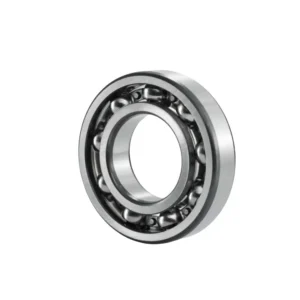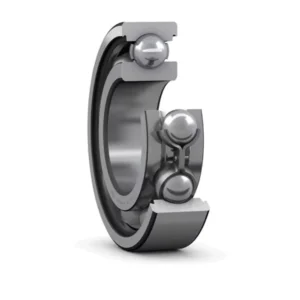

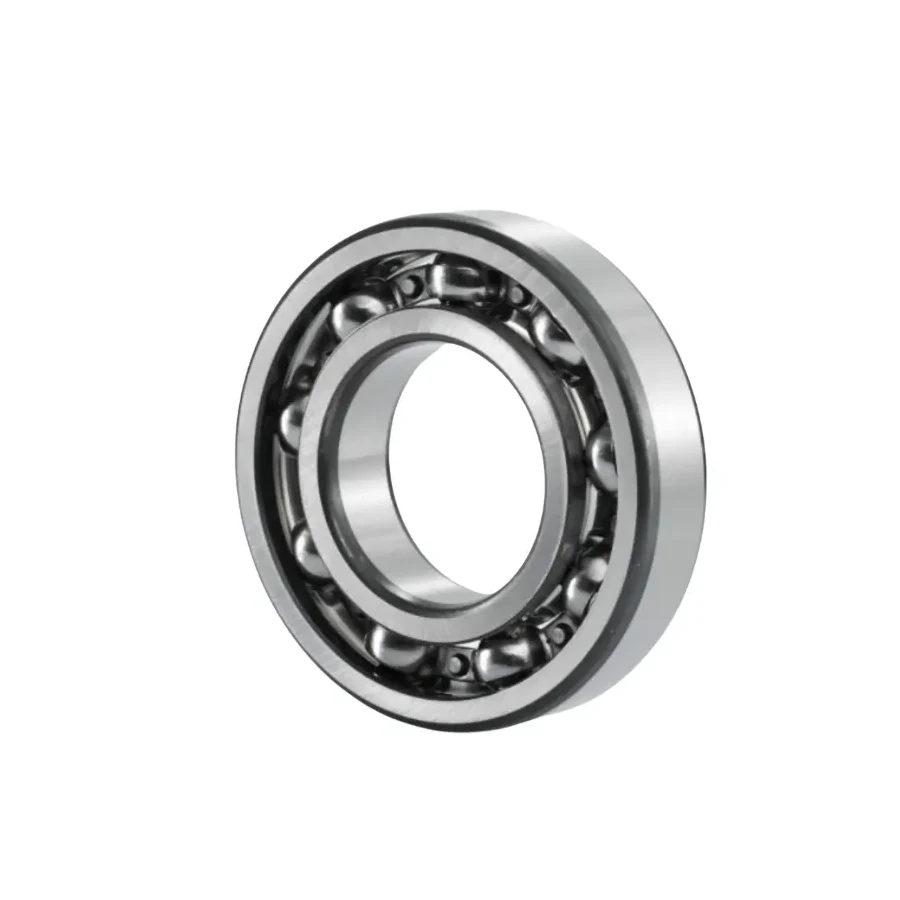
At the non-drive locating end of a 6 kV/10 kV synchronous alternator or a megawatt-class medium-voltage induction motor, engineers need crisp axial magnetic-center positioning with minimal parasitic drag—without bloating the cast endshield housing around a large 160 mm rotor shaft. Built to the sleek ISO 15 light 60 series at 160 × 240 × 38 mm and 5.63 kg, the ZQM 6032 deep groove ball bearing balances 136 kN dynamic capacity (Cr), 135 kN static rating (C0r), and smooth high-speed ceilings of 2,400 rpm grease or 3,000 rpm oil.
6032 Technical Specifications & Dimensions
| Parameter Category | Technical Parameter (Symbol) | Catalogue Reference Value |
|---|---|---|
| Boundary Dimensions & Weight | Bore diameter (d) | 160 mm |
| Boundary Dimensions & Weight | Outside diameter (D) | 240 mm |
| Boundary Dimensions & Weight | Width (B) | 38 mm |
| Boundary Dimensions & Weight | Reference mass (Weight) | 5.63 kg |
| Load Ratings & Limiting Speeds | Basic dynamic load rating (Cr) | 136 kN |
| Load Ratings & Limiting Speeds | Basic static load rating (Cor) | 135 kN |
| Load Ratings & Limiting Speeds | Limiting speed (grease) | 2400 rpm |
| Load Ratings & Limiting Speeds | Limiting speed (oil) | 3000 rpm |
| Abutment & Fillet Dimensions | Shaft abutment diameter (da) | 171 mm |
| Abutment & Fillet Dimensions | Housing abutment diameter (Da) | 229 mm |
| Abutment & Fillet Dimensions | Minimum chamfer dimension (r12) | 2.1 mm |
| Abutment & Fillet Dimensions | Maximum fillet radius (ra) | 2 mm |
| Calculation Factors | Calculation factor (f0) | 16 |
Data source: ZQM Bearings online catalogue database (factory PDF catalogue v1). Load ratings, limiting speeds, and parameters without individual test records serve as catalogue reference values; verify shaft/housing shoulders (da, db, Da), tolerances, internal clearance, and drawings prior to ordering.
Why 60-Series Light Geometry Excels on Large Rotating Electrical Machines
Direct-coupled alternators and multi-pole MV motors carry modest radial loads relative to their thick torque-transmitting shafts, making the compact 6032 cross-section ideal for locating-end duty:
- Low Parasitic Friction & Cool Running: Smaller ball pitch and light 38 mm width minimize windage and grease churning torque at 1,500–1,800 rpm synchronous speeds, boosting electrical machine efficiency and lowering endbell temperatures.
- Bidirectional Magnetic-Center Pinning: Deep uninterrupted raceway shoulders lock the heavy laminated rotor smoothly onto its stator magnetic center while absorbing minor axial coupling push-pull during load-step synchronization.
- C3 Thermal Radial Clearance Discipline: Rotor copper losses heat the 160 mm shaft significantly hotter than the fan-cooled outer endbell. Specifying C3 radial internal clearance offsets both shaft interference expansion and inner-to-outer ring thermal delta cleanly.
- Compact 240 mm Endshield Footprint: Preserves generous cooling-air passage geometry and stator end-winding clearance inside tight IEC/NEMA large motor frames.
ISO 15 Motor & Alternator Reference Table for 6032
| Maker | Catalog Code | Bore d | OD D | Width B | Electrical-Machine Execution |
|---|---|---|---|---|---|
| ZQM | 6032 | 160 mm | 240 mm | 38 mm | ISO 60 open base; C3 & low-noise grade per order |
| SKF | 6032 / 6032/C3 | 160 mm | 240 mm | 38 mm | Explorer steel or brass cage; INSOCOAT options |
| FAG / Schaeffler | 6032 / 6032-C3 | 160 mm | 240 mm | 38 mm | Generation C quiet motor series |
| NSK | 6032 / 6032C3 | 160 mm | 240 mm | 38 mm | Electric motor quality (EMQ) low-vibration range |
| NTN / Koyo | 6032 / 6032C3 | 160 mm | 240 mm | 38 mm | Open, shielded ZZ, and C3 motor bearings |
Cross-reference scope: All models listed above align strictly on ISO 15 nominal envelope dimensions (160 × 240 × 38 mm) for quick identification. Internal clearance (CN vs C3), acoustic vibration grading, and electrical-insulation coatings vary significantly across suppliers; always confirm motor nameplate specs before ordering replacements.
Shaft Fits, Abutments & Bearing-Current Fluting Defense
- Machine Exact Endshield & Rotor Shoulders: Keep rotor shaft backing shoulders at da = 171 mm (minimum) and cast endshield housing lips at Da = 229 mm (maximum), holding corner fillets strictly below the rmin = 2.1 mm chamfer so the 38 mm rings seat true without axial binding.
- Separate ISO 286-1 Fit Selection from ISO 1101 Seat Geometry: Grind the 160 mm cylindrical rotor journal to an ISO 286-1 k5/m5 (or m6 on heavy shafts) interference fit paired with an H6/J6 locating housing bore, while independently checking ISO 1101 bore cylindricity and concentricity between drive-end and non-drive-end brackets.
- Mitigate VFD & Alternator Shaft-Current Fluting: High-voltage asymmetric magnetic flux and PWM inverter common-mode voltages induce circulating shaft currents that spark across the thin grease film, carving washboard “fluting” ridges into 6032 raceways within months. Pair the locating end with an insulated bearing housing sleeve, ceramic-coated outer ring, or shaft-grounding brush kit on the opposite drive end.
- Warm-Mount & Verify Axial Float Clearance: Heat the 5.63 kg bearing inductively to 95–110 °C for damage-free mounting on the 160 mm shaft, ensuring the opposite non-locating cylindrical roller bearing (e.g., NU series) floats freely to absorb shaft thermal growth.
Motor Relubrication Discipline & Noise-Floor Preservation
In 4-pole (1,500/1,800 rpm) alternators operating well within the 2,400 rpm grease ceiling, over-greasing causes more premature failures than starvation. Use a clean polyurea or lithium-complex electric-motor grease (NLGI 2, ISO VG 100 base oil), purge old grease through an open lower relief valve during scheduled PM intervals, and track velocity/envelope vibration spectra to catch early electrical frosting or acoustic roughness long before winding rub occurs.
Motor-Shop Overhaul Checklist & Inquiry Path
Before placing a rewind-shop or plant-spares order for 6032 bearings, confirm four specs: (1) radial clearance code (typically C3 for HV/MV motors), (2) whether VFD or HV shaft-current insulation measures are present on the endshield, (3) open vs shielded (-ZZ) configuration matching your regreasing ports, and (4) shaft speed and lubrication type (grease vs oil-mist/circulating oil). Send your motor frame data to our ZQM electric-machine bearing desk.
Selection Tools & Related Guides: Decode C3, M, and ZZ motor suffixes in our Bearing Suffix Decoder, verify dimensions on the 6032 Catalog Page, browse Deep Groove Ball Bearings, or review heavy drive-motor environments in Steel Rolling Mills.
HV Alternator & MV Electric Motor 6032 Technical FAQ
Why do 6 kV/10 kV alternators commonly specify 6032/C3 instead of standard CN clearance?
Mounting the 160 mm bore onto an interference motor shaft expands the inner ring, while rotor I²R electrical heating runs the inner ring 15–25 °C warmer than the ventilated outer endbell. C3 clearance preserves positive running clearance once full thermal load stabilizes.
What is bearing-current fluting on a 6032, and how can plants prevent it?
Electrical discharge machining (EDM) from induced shaft voltage pits microscopic craters across the raceway that rapidly grow into periodic washboard flutes and loud whining noise. Breaking the current loop with insulated endshield sleeves, ceramic-coated outer rings, and shaft-grounding brushes stops fluting permanently.
Why is the light 6032 chosen over a heavier 63-series ball bearing on a 160 mm alternator shaft?
Direct-coupled synchronous alternators carry relatively smooth radial loads on thick stiff shafts. The 6032 (240 mm OD, 5.63 kg) runs with far lower frictional drag and higher speed headroom (2,400 rpm grease / 3,000 rpm oil) while keeping endshield castings compact.
Can a single 6032 locate the rotor while the drive end uses an NU cylindrical roller bearing?
Yes—that is classic large-motor architecture. The drive-end NU bearing absorbs heavy coupling or belt radial loads while allowing frictionless axial shaft expansion, and the non-drive-end 6032 pins axial rotor alignment cleanly.